Raised Pedestrian and Bicycle Crossings
Search Content
Download PDF
Introduction
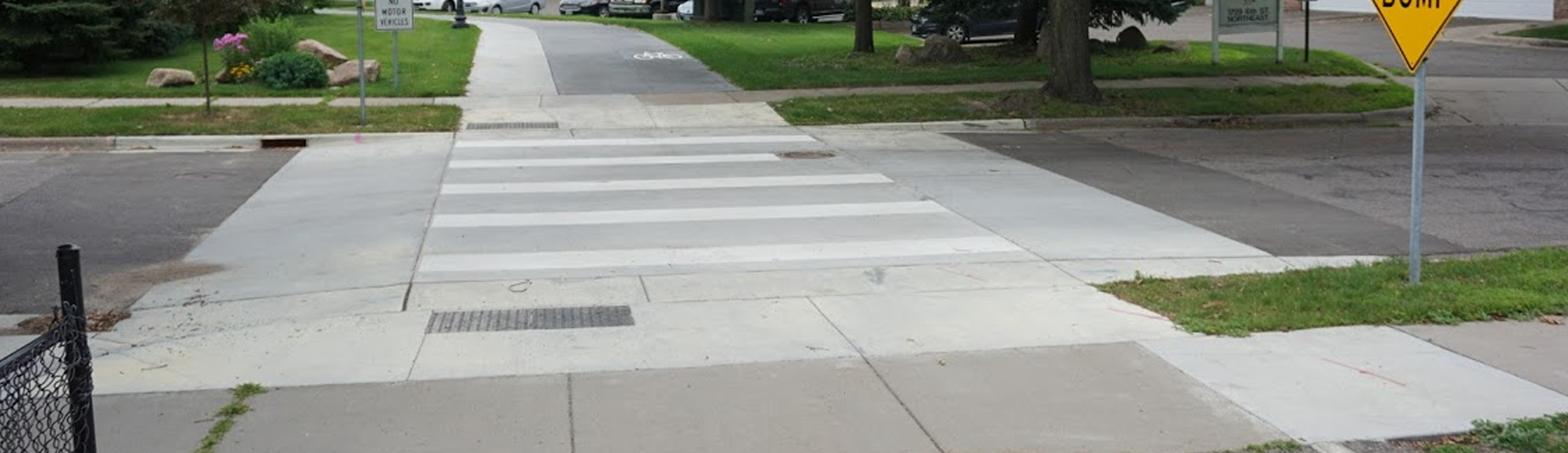
Raised pedestrian and bicycle crossings, also known as raised crossings or raised crosswalks, elevate the pedestrian or bicycle crossing closer to the level of the sidewalk.
Raised crossings are intended to support traffic safety, improve yielding rates to crossing pedestrians and bicyclists, and make a more attractive and comfortable pedestrian and bicycle environment. They can provide these benefits:
- When speed hump features are included, they support slower, safer traffic and turning speeds and support compliance with stop signs.
- Increased visibility of crossing pedestrians and bicyclists.
- Less “down & up” for pedestrians and bicyclists at crossings.
- Reduced likelihood of motorists stopping in the crosswalk when waiting to proceed through the intersection.
Raised crossings differ from raised intersections, which raise an entire intersection. The Street Design Guide does not include guidance for raised intersections at this time given their more limited potential application.
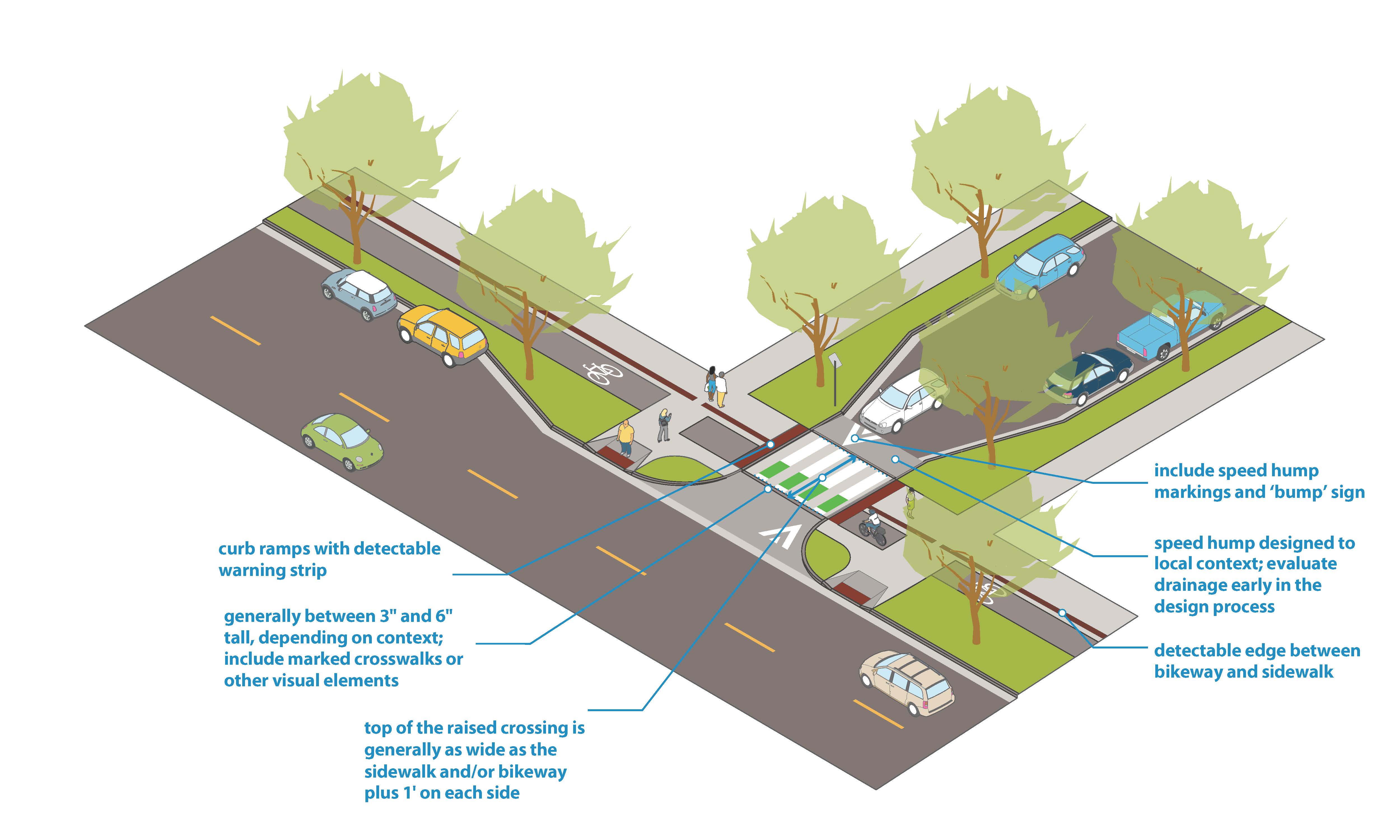
Figure 3.7D.4:
Raised pedestrian and bicycle crossings
Design Considerations
|
When to Use |
|
|---|---|
|
Drainage |
Drainage challenges may limit the feasibility of using a raised pedestrian and bicycle crossing and need to be considered early in the design process. |
|
Speed hump element |
|
|
Height |
Raised crossings should generally be between 3" and 6" tall to minimize the vertical difference of the pedestrian and bicycle crossing. The height of a specific raised crossing should be determined based on local factors, including drainage and nearby street grades. |
|
Detectable warning strip |
Detectable warning strips (typically made of truncated domes) must be installed on the edge of sidewalk to alert users that they are about to enter the roadway. See MnDOT’s current curb ramp guidelines (opens in a new tab), curb ramp standard plans (opens in a new tab), and other design guidance and standards (opens in a new tab) for details on constructing detectable warnings. |
|
Markings and signage |
|
|
Width |
The top of the raised crossing should generally be as wide as the sidewalk or bikeway plus 1’ on each side if feasible. |
|
Midblock crossings |
See NACTO guidance for midblock crosswalks (opens in a new tab) for additional considerations. |
|
Coordinate with Fire Department |
It’s important that the raised crossing is designed to ensure that fire truck access is maintained. Work with Fire department staff on details for new raised crossings. |
|
Consider ambulance traffic |
On routes where there is significant ambulance traffic, ensure that the design will not disrupt EMS response. |
|
Notification for winter plowing |
Ensure that Transportation Maintenance and Repair staff are aware of new raised crossings so plow drivers can plan accordingly. |
|
Evaluation |
Raised crossings are still being evaluated; this guidance may evolve in the future with further evaluation. |